Creator Record
Metadata
Name |
Tait, Arthur Fitzwilliam |
Dates & places of birth and death |
Born 1819, Liverpool, England Died 1905, Yonkers, NY |
Nationality |
British-American |
Occupation |
Painter and printmaker |
Notes |
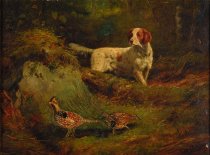
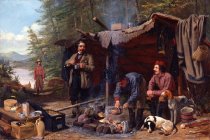
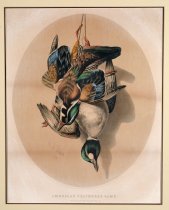
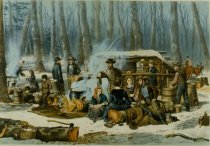
Arthur F. Tait was the tenth of twelve children. He taught himself to draw by sketching animals at his aunt and uncle's farm and by copying masterworks in the Royal Manchester Institution. When he was 12 years old, he began working at Agnew & Zanetti's Repository of Art in Manchester where he was encouraged by Agnew to develop his obvious talent. Over the next decade, he honed his skills including the study of oil painting and became a modestly successful artist, lithographer and art teacher. In August 1850, he moved from England to New York City with his wife, Marian, and cousin, George Danson, partially for his wife's health, but also hoping to find more opportunity and less competition in America. In 1851 while looking near Malone NY for his missing brother, Augustus, he discovered the Adirondacks, fell in love with the magnificent, wild, largely unmapped area and spent much of the rest of his life there studying and painting the landscape and wildlife. Tait found success in America and his paintings won wide acclaim enhanced by his relationship in 1852 with Currier & Ives, "Printmakers to the American People", who reproduced his paintings as lithographs. He became one of their most popular artists, but his relationship with them ended in 1864 after a dispute over unauthorized use of one of his images. Fortuitously, the mid-1860s brought a new relationship with Louis Prang whose pioneering chromolithographs of his paintings also proved very popular. His original paintings were selling well, he was financially more secure and professionally well established, but in 1872, he was stunned by the sudden and unexpected death of his wife of 34 years, Marian, in NYC. He returned to England to try to escape the pain of the loss accompanied by Mary Jane "Polly" Bortoft (Marian's niece from England who had been living with them). After spending several months with family and friends, he returned to NYC with Polly and Polly's half-sister, Emma Hough, to resume his life. He and Polly later married and in 1874, the three returned to the Adirondacks to live and where he felt most at home to continue his art. They purchased a 100 acre property near Long Lake that they named "Woodside" and built their home where he and Polly had their first child, Arthur James Blossom and later in NYC, their son, Francis Osborn. Tragically, Polly died from child birth complications not long after Francis was born. The rustic conditions of their home in Long Lake became increasingly difficult for his family and, devastated by his loss, Tait sold the house, furnishings and property in 1881 and they all moved back to their apartment in NYC. He later married Emma who had also become a devoted stepmother to his two children. He took his last trip to the Adirondacks in 1888 and in 1900, the family moved from Manhattan to Yonkers where he built a home and studio and spent his final years. He passed away at the age of 85 at home in early spring, to quote his son Arthur, "admiring faint green on shrubbery opposite in old Ludlow Estates gazing from his bed out on the beauty he loved." Arthur F. Tait has been called "America's greatest animal and sporting artist" as well as "the foremost artist of life in the Adirondacks". His original paintings and Currier & Ives prints are in private collections and displayed in over 50 museums in the US and England including the Metropolitan Museum of Art, the Smithsonian American Art Museum, the Library of Congress and the Yale University Art Museum. As well, many of his paintings are owned by the Adirondack Experience which has also held several exhibits of his original paintings and memorabilia preserved in their archives. In 1933, the editor of "Antiques" magazine wrote that "America owes a debt of gratitude to Arthur F. Tait" for his beautiful and accurate depiction of his adopted country and his wide-ranging and enduring popularity attests to this view. |
Publications |
A Record of the Paintings by A.F. Tait or Tait's Register; three volumes in the ADKX Archives "Arthur Fitzwilliam Tait: Artist in the Adirondacks. An Account of His Career" by Warder Cadbury and A Checklist of His Works by Henry F. Marsh (Arthur JB Tait Initiator & Contributor) "The Adirondack World of A.F. Tait" by Caroline M. Welsh, The Adirondack Museum "A.F. Tait, Artist in the Adirondacks", The Adirondack Museum "Wild Impressions, The Adirondacks on Paper", Prints in the Collection of the Adirondack Museum "Views on the Manchester and Leeds Railway, Drawn from Nature and On Stone", by A.F. Tait "American Frontier Life - Early Western Painting and Prints" "Painters and the American West: The Anschutz Collection" "Nineteenth-Century America: Paintings and Sculpture" "American Paintings in The Metropolitan Museum of Art" "Who Was Who in American Art, 1564-1975: 400 Years of Artists in America" "Britannica Encyclopedia of American Art " Numerous books featuring the prints of Currier & Ives' most prolific and popular artists including A.F. Tait, eg "Currier & Ives - Chronicles of America" and "Currier & Ives: Printmakers to the American People" Hundreds of magazine & newspaper articles, biographies, featured inclusion in art books and museum catalogs, art indices and encyclopedia of prominent American artists |
Relationships |
Father, William Watson Tait (1771 - 1851) Mother, Jane Danson Tait (1781 - 1848) Wife, Marian Cardwell (1822 - 1872, married from 1838-1872) Wife, Mary Jane "Polly" Bortoft (1844 - 1880, married from 1873-1880) Son, Arthur James Blossom (1875 - 1949) Son, Francis Osborn (1880-1925) Wife, Emma Hough (1860 - 1938, married from 1882-1905) |
Places of residence |
After moving from England to America, Tait and his family alternated living in the New York City area, usually in a spacious apartment in the YMCA Building in Manhattan, and the Adirondacks, initially in camps and sylvan lodges in various spots in the woods and then in a home he and his wife, Polly, built on 100 acres of beautiful woodland bordering on Long Lake. In his last decade, he and his wife, Emma, built a home and studio in Yonkers where he spent the remainder of his life. Details: 1819 - 1850 - Liverpool and Manchester, England 1850 - Residence & Studio at 150 Spring Street, NYC 1851 - 1874 - Camps and sylvan lodges in Long Lake, Raquette Lake, South Pond, Lower Chateaugay Lake, Loon Lake, Ragged Lake, etc. in the Adirondacks 1854 - Residence & studio at 600 Broadway, NYC 1859 - Residence & studio at "Woodstock" in Morrisania in what is now the Bronx 1871 - Residence in an apartment in the YMCA Building, 23rd St & 4th Avenue, NYC 1874 - Residence & studio built on 100 acres purchased in Long Lake, NY 1881 - Sold property in Long Lake and moved to his apartment at the YMCA in NYC 1897 - Residence & studio at 82 Waring Place, North Yonkers 1900 - Residence & studio at 15 Fairfield Place, Yonkers |
Role |
Artist |
Titles & Honors |
National Academician, National Academy of Design "Associate Member National Academician, National Academy of Design Associations by invitation only: "Member, New York Sketch Club (a group of artists & writers whose members played a significant role in the development of the National Academy of Design) "Member, Lotos Club (a group of writers, artists, journalists, educators & scientists) "Member, Century Association (a private club in New York City for people with distinction in literature or the arts) "Member, Palette Club (an organization of artists and literary men) |
Education |
Agnew and Zanetti's Repository of Arts, Manchester, England; worked selling prints, paintings and decorative arts. Royal Manchester Institution |
Related Records
-
-

-
-
-

-

-
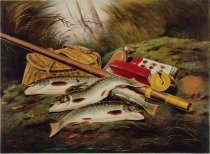
-
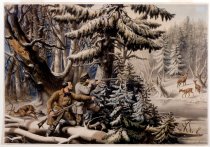
-
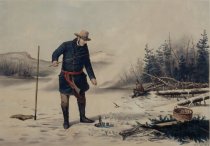
-
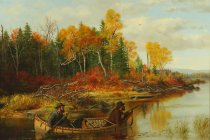
-
-

-
-
Arthur Fitzwilliam Tait miscellaneous papers, 1841-1904
Tait, Arthur Fitzwilliam
Record Type: Library

-
-
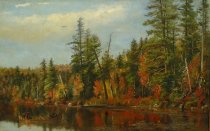
![Autumn Morning, Racquette [sic] Lake](https://s3.amazonaws.com/pastperfectonline/images/museum_370/154/thumbs/19630370002.jpg)
-
-
-
-